
Personal Health
Her Doctor Said ‘Keep Them Cool.’ She Did. They Still Burned.
Every night for two years she tried a different arrangement — and her doctor’s only answer was two words.
My feet lit up the second the sheet touched them — every single night, like clockwork, like something had decided this was my life now.
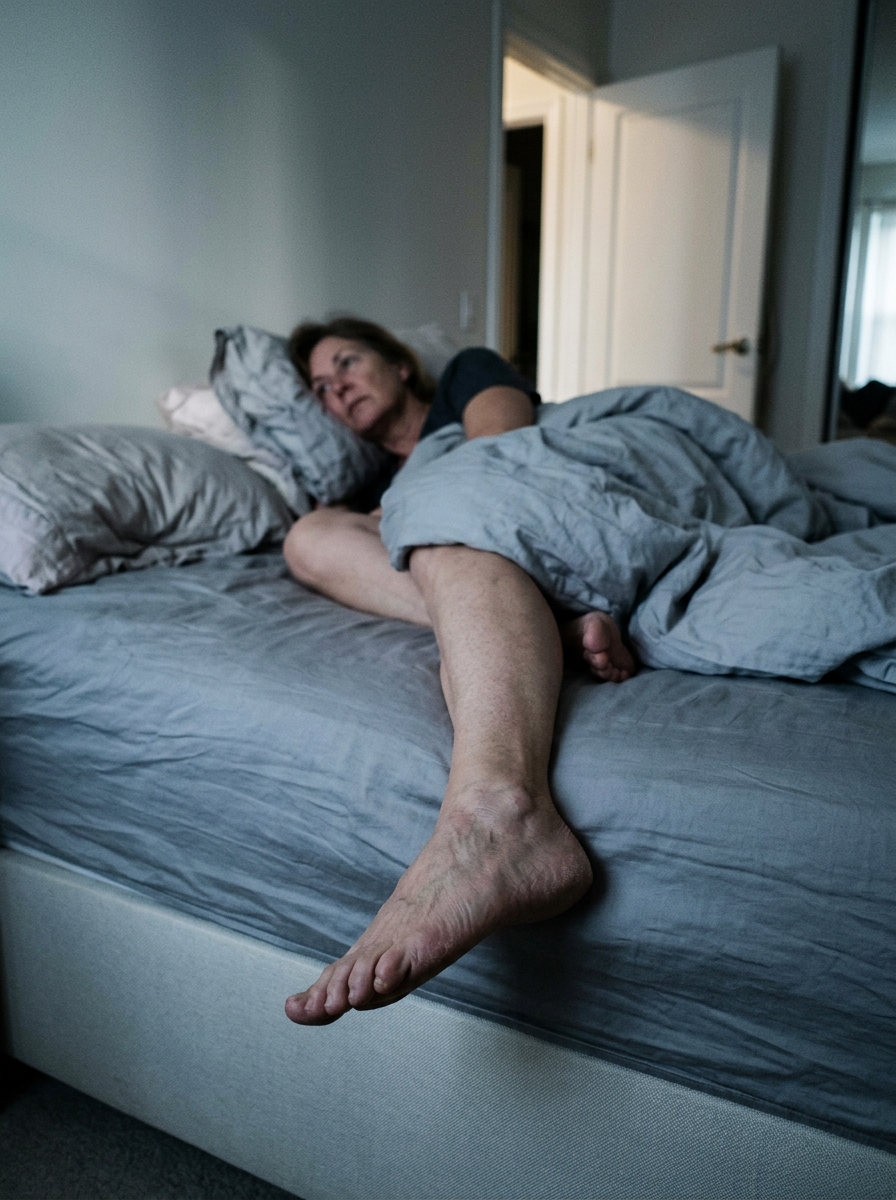
I had a system. Feet off the edge of the mattress, right foot a little lower than the left because the left could handle the cool air slightly better. One pillow wedged under my right calf. Duvet pushed to the empty side of the bed. Cold pack sweating on the nightstand by 11pm. I rebuilt the arrangement at 2:30am when the first version stopped holding. And again at 4:15. Every night. For two years.
When I finally went to a doctor about it, he billed me $320 to tell me to keep them cool.
I had been keeping them cool. They still burned.
But I need to warn you: what I eventually found out about why the burning wouldn’t stop will make you angry — because the real explanation had been in the research for years, and not one person who could have pointed you toward it stood to profit by doing so.
I’m 63. Retired music teacher, Columbus, Ohio. And what I’m about to tell you is what I wish someone had said before I spent two years redesigning my bed around my own feet.
My name is Peg Holloway. I taught middle school music in Columbus for thirty-one years, and I retired the summer David got sick, so the timing wasn’t exactly the celebration I’d imagined.
He passed two and a half years ago. My daughters call on Sundays. They ask how I’m sleeping, and I say fine.
There’s a cold pack that lived on my nightstand for two years. Sat there every night. I filled it at 11pm and it was warm again by 2:30. I didn’t think of it as a sign of anything. I thought of it as a fixture, the way you stop seeing a crack in the ceiling after long enough.
What I’m about to tell you is what was actually happening in that bedroom.
What the night actually looked like
The burning wasn’t a slow burn. The top of my left foot. The weight of the lightest sheet. Then the right one too, and then it didn’t matter whether I touched the covers or not because my legs were already awake.
I started losing my afternoons to planning my nights. What to eat before bed. Whether the cold was worse than the heat. Which arrangements I hadn’t tried in a while. I kept a mental tally. I adjusted variables.
I used to sleep the way other people breathe. I didn’t think about it. I was out before David even turned off the lamp.
A Tuesday in November. I repositioned three times between 11pm and 3:40am. Left foot outside. Both feet outside. Pillow lengthwise, which I’d read somewhere might help because of the elevation. At 3:40 I fell asleep for what felt like a long time and turned out to be one hour and forty minutes. I got up at 7:00, drove to teach a piano lesson at 8:00, and when the mother asked how I was doing, I said a little tired today.
My younger daughter called the Saturday before Easter. She asked how I was sleeping.
I said pretty well, actually.
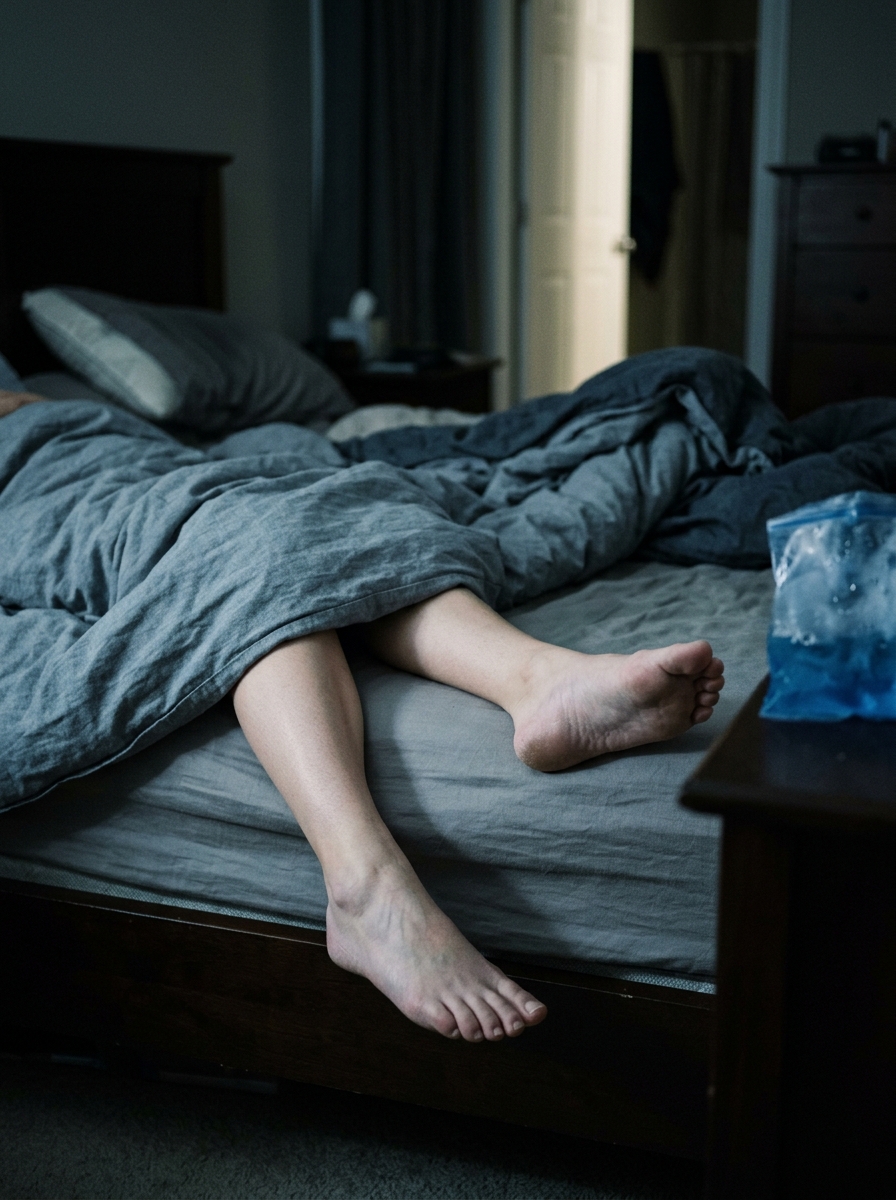
The arrangement she rebuilt every night for two years. Not a fix. A negotiation.
The appointment that cost three hundred and twenty dollars
I bought the cooling sheets first. Linen, because I’d read that linen breathes and stays cooler than cotton. Eighty-nine dollars. They were nicer than my old sheets and they were completely irrelevant.
Then the foam wedge pillow. The kind for elevation, with the angled cut on one end. Sixty-five dollars. Elevation does nothing, as it turns out, when the problem is not circulation. It puts your legs in a different place to burn.
Then the IceWraps cooling socks. Forty-five dollars a month, because I went through them faster than they were designed for. They feel wonderful for, I’d say, thirty-five minutes. Then they go room temperature and you’re back where you started.
Lidocaine cream. Thirty-two dollars a tube, two tubes a month. It works. I want to be fair about that: it works for about an hour. At which point you wake up and it hasn’t worked anymore, and you need to decide whether it’s worth getting out of bed at 3am to apply more.
B12 supplements. A friend mentioned them. Twenty-eight dollars a month. Alpha-lipoic acid, which I’d seen in an article about nerve pain. Thirty-five dollars a month.
By that point I was spending roughly a hundred and fifty dollars a month on managing something that was still there every night. Tracked from the beginning, it came to somewhere near eighteen hundred dollars in the course of a year.
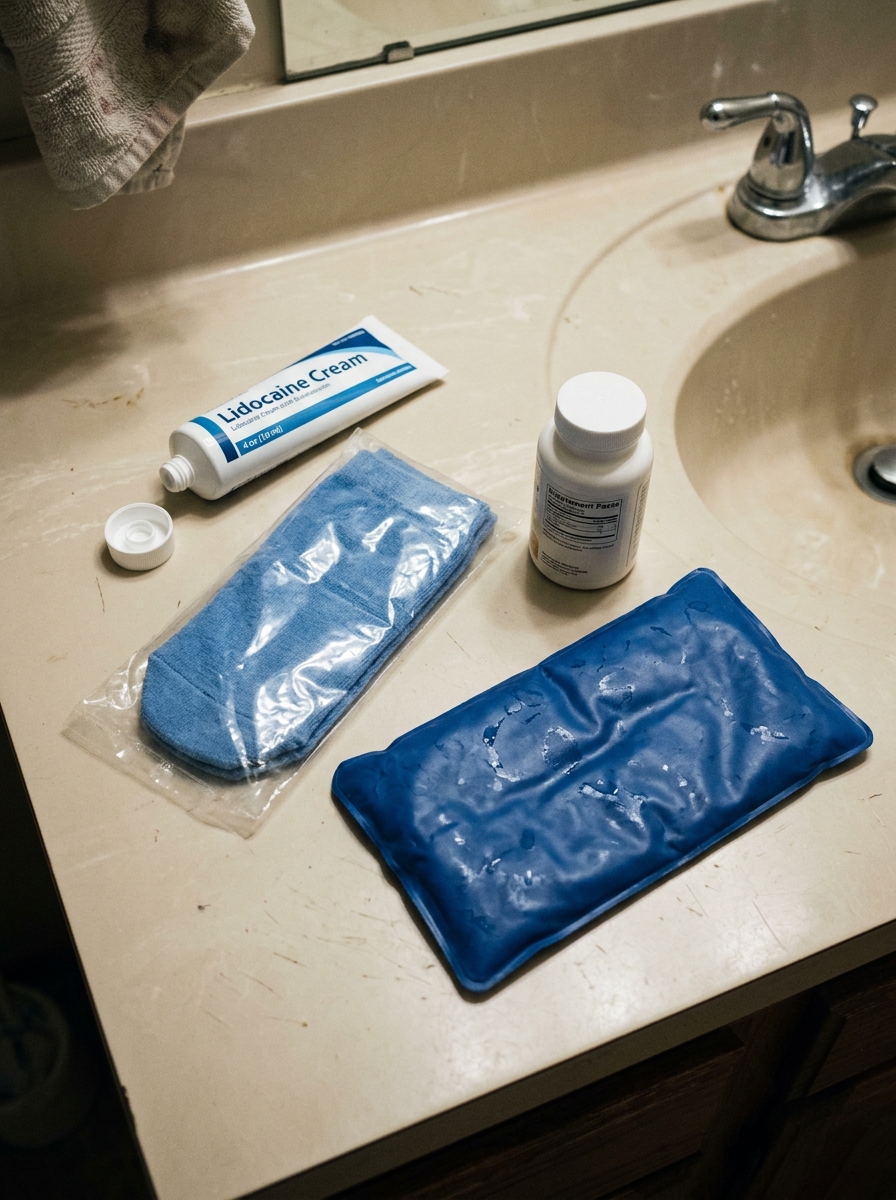
Each one promised an edge off. None of them was the answer.
Then I went to the doctor.
His name was Dr. Krauss. He was in his mid-fifties, had a framed print of a sailboat behind his desk, and was clearly a man with seventeen patients to see that afternoon. He pressed two fingers against the top of my right foot for approximately three seconds.
He asked whether I had diabetes. I said no. He said circulation and nerve sensitivity are very common at your age, and that I should keep my feet elevated at night and avoid constrictive footwear.
He wrote nothing down. He referred me to nobody. He scheduled a follow-up if it gets worse.
The bill was three hundred and twenty dollars.
I drove to the parking lot and sat in the car. I didn’t cry. I knew I wasn’t going to cry over this. My hands were on the steering wheel and I kept them there, looking at the wall of the parking structure, for what was probably four or five minutes. Then I started the engine.
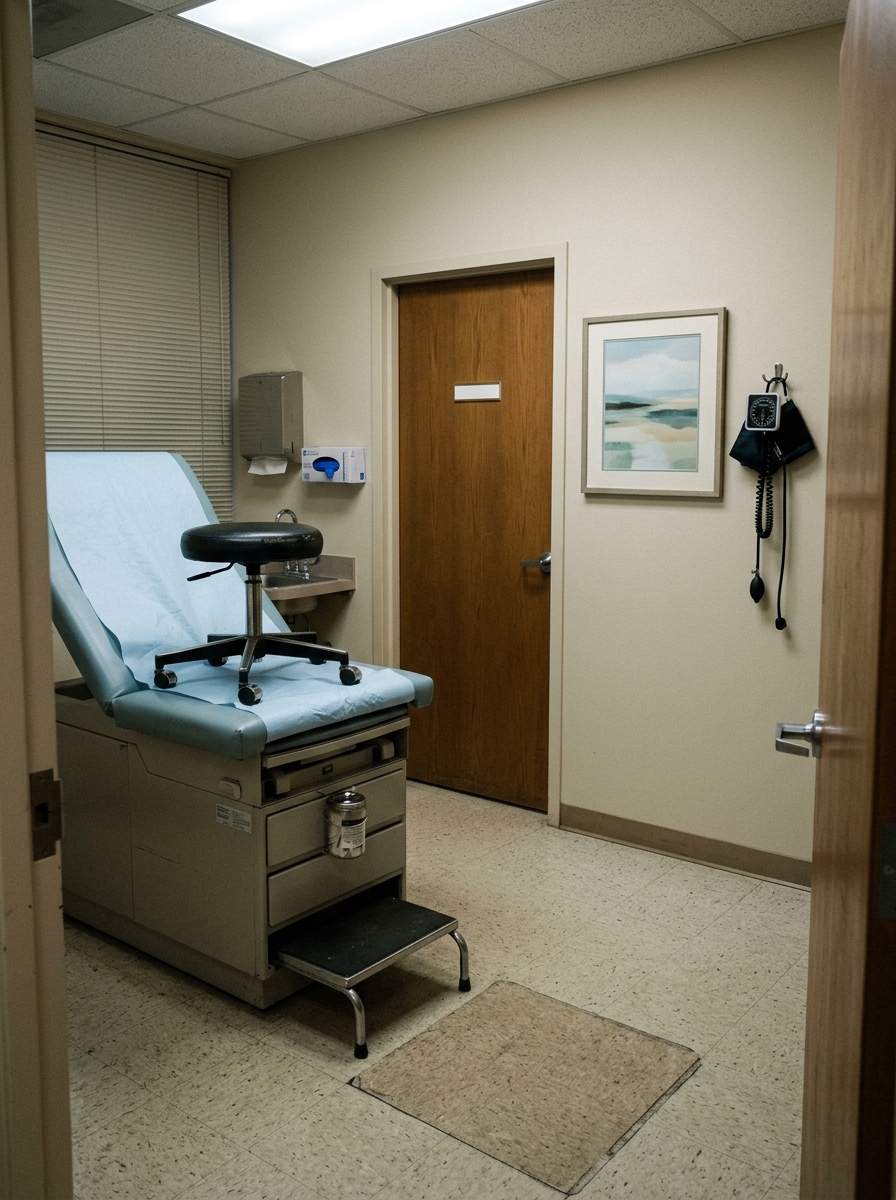
She drove home with an appointment summary and no answer.
Thanksgiving at my daughter Claire’s house in Westerville. She’d done the whole thing. Turkey, the sweet potato casserole my grandkids eat six portions of, the good napkins, all of it.
By 6pm my feet had been burning for four hours.
I excused myself before dessert and went to lie down in the guest bedroom. When Claire came to check on me, I told her it was a sinus headache.
She believed me. Of course she did. I said it the way you say something true.
That was the part that finally got to me. Not the pain. Not the cold pack I’d left running at home. Not the three hundred dollars I’d spent that month. The lie came out automatic. I had been managing this for so long that hiding it had become a reflex.
That night, I started looking.
Two a.m., four days later
That night I was on my phone at 2am, feet off the bed, following one link to another the way you do at that hour.
I found a forum thread about burning feet at night. A woman was describing the exact setup I had. Feet outside the covers. The linen sheets she’d switched to. Two years. Her list of things tried read like my own list.
At the bottom of the thread she mentioned something called PEA. Said it was a compound the body makes on its own, something to do with how nerves signal.
My first reaction was honest: great, another supplement somebody’s swearing by.
I closed the thread.
Opened it again at 3:15am.
The thing that stopped me from writing it off entirely was one sentence she’d written. About how PEA was the first thing that explained why the cooling only bought her twenty minutes. Not a product claim. Just an explanation.
I didn’t order it that night. I went back to the thread four more times over the following four days.
Then I ordered it.
What the surface never reached
The bottle sat on my nightstand for three days before I opened it.
I’d done enough reading by then to understand what PEA was. It stands for palmitoylethanolamide. I wrote that word down wrong twice before I got it. The body makes it. On demand. When tissue is stressed or inflamed, cells release PEA to quiet the nerve alarm and calm the immune response.
What I hadn’t understood until I read the mechanism research was why the cooling had never worked more than twenty minutes.
Your body makes PEA on demand to quiet overactive nerve-alarm cells. But months of chronic irritation outpaces that supply, so the shutdown signal never arrives for sleep.
Think of it as the body’s built-in volume knob. Chronic irritation keeps turning it back up. When PEA runs behind demand, the volume doesn’t drop for sleep. Not because of the sheets. Not because of the temperature in the room. Because the cells generating the alarm never got the instruction to stand down.
The researchers call it on-demand insufficiency. I call it the calming deficit. The demand outpaced the supply, and the system that quiets the nerve alarm was running behind.
That’s not a failure of the products, exactly. It’s a failure of address.
Youfirst PainBloc PEA 600 mg is a supplemental form of that compound. At 600 milligrams — the dose from the clinical trials, not a marketing figure.
That is a pharmaceutical-research result attached to a compound your body already knows what to do with.
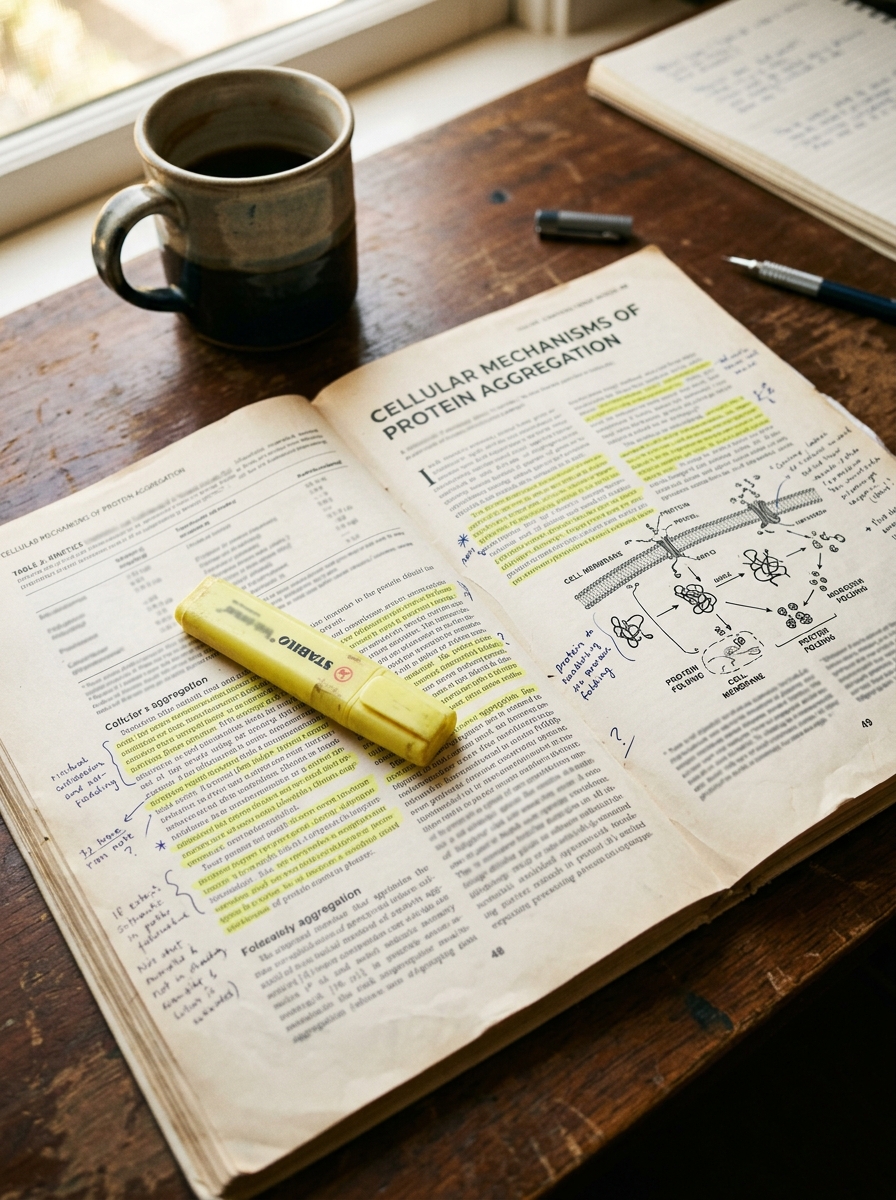
The driver cells no cream reached. What PEA addresses from the inside.
If you’ve already read enough and want to check the formula and trial terms —
This is where I found it →The supplement aisle is organized around what is profitable to sell. Not around what addresses the cellular mechanism of burning nerve pain at night.
The label on a nerve-support supplement is required to disclose the ingredients. What the label is not required to disclose is whether those ingredients reach the cells generating the signal. The regulatory distinction between what is in the capsule and what your body actually uses from it to address the driver cells is not an accident. It is a permitted omission. Permitted deliberately, because transparency about mechanism would require accuracy about the ingredient that actually costs money to source correctly and that cannot be patented.
PEA cannot be patented. It’s a compound the body already makes. No pharmaceutical company funds doctor training about it. No supplement brand had a margin-expanding reason to build a product around it and put it center-stage when the marketable ingredients — the ones with a brand name and a proprietary story — were sitting right there.
The system isn’t broken. It was built to work exactly this way.
I wasn’t stupid for spending eighteen hundred dollars a year on things aimed at the surface. I was reading the front of the label the way the label was designed to be read.
Day four
I started taking it on a Monday. One capsule with dinner. The directions said with food.
I didn’t feel anything different the first night. Or the second. I told myself this was fine, that I’d read it takes time. I told myself this while the cold pack sweated on the nightstand at 11pm, same as always. Both of us still in our places.
Something was different. Not gone. Not even close to gone. Quieter. The burning was still there but it wasn’t running the room the way it had been. Somewhere around 1am I shifted and realized I hadn’t moved my feet in a while. They were under the duvet. I hadn’t put them there deliberately.
I almost talked myself out of noticing it. Two years of trying had made me very good at explaining away small differences.
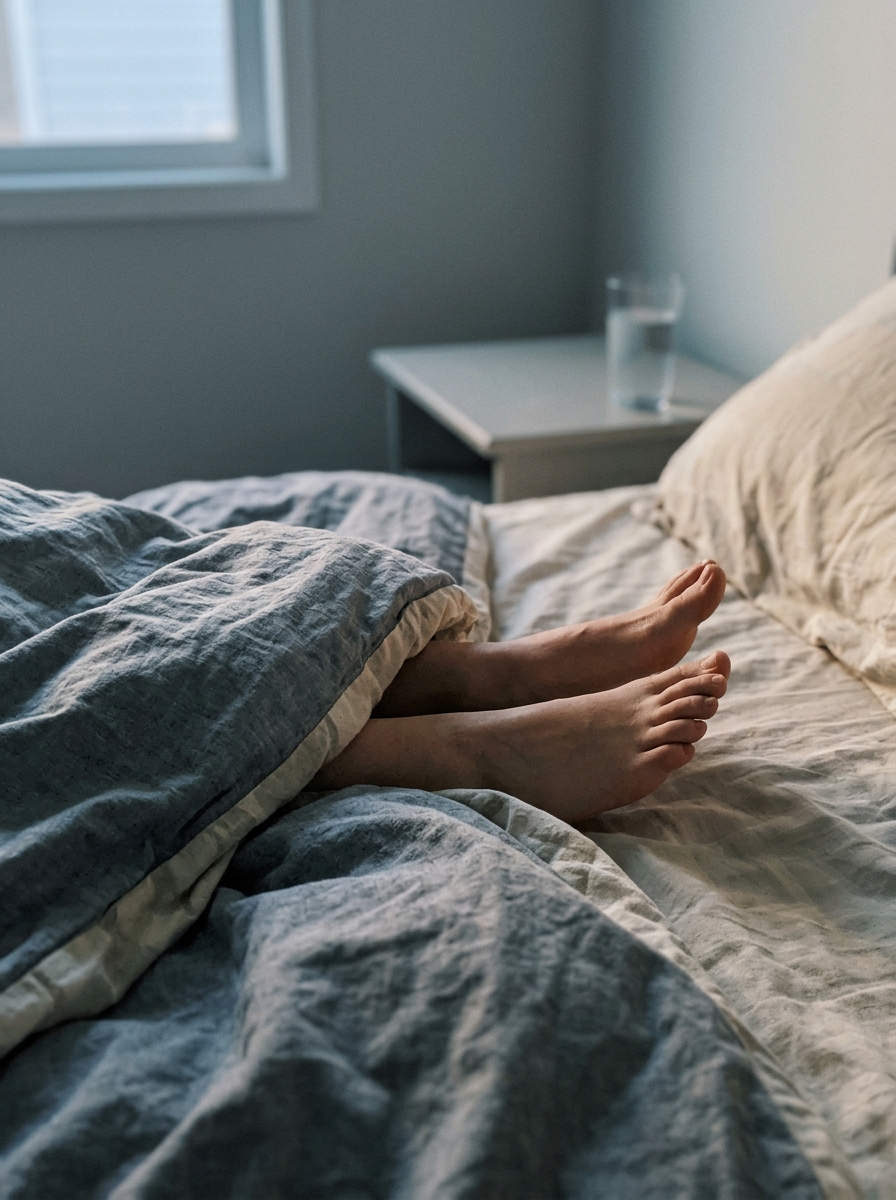
Day four. Both feet under the duvet. Nothing deliberate about it.
I woke up at 4:47am. Not from repositioning. Not from the burning. I just woke up because I was done sleeping, the way you’re supposed to wake up. I lay there for a moment trying to figure out what had pulled me out, and then I understood. Nothing had. It was 4:47 and I was simply done.
I got to the end of a Thursday without setting up the cold pack. I realized I’d forgotten to take it out of the freezer. I checked in with my feet. I didn’t need it. I put it back.
I stood at the kitchen counter for twenty-two minutes making dinner. Not leaning. Not calculating every few minutes whether I could keep going. Making dinner. I know it was twenty-two minutes because I’d done the sauce and the pasta and I was halfway through the salad when I looked at the clock and counted back.
I went back and read the forum thread around week three. The woman who’d first written about PEA had also mentioned sleep. “I’ve been using this for two months,” she wrote, “and one thing for sure, I’m sleeping better.” That was the whole sentence. No drama, no list of symptoms resolved. Just that. I understood exactly what she meant.

Twenty-two minutes. Standing. Not counting down to when she’d have to stop.
The Sunday it happened. I woke up at 6:15am. Both feet under the covers. The room was getting light. I lay there for a while trying to understand what was different before I worked out that nothing was wrong. Seven hours. I counted back. Seven hours, and the cold pack was in the freezer where I’d put it four days ago.
I’m not going to tell you this will work for you. I don’t know what’s causing your burning specifically, and I’m not a doctor. What I can tell you is what it changed for mine.
See If It’s Still Available Where You AreThe company gives you ninety days. Full refund, no questions asked. I verified this before I ordered. The terms were exactly what they said.
Two things worth saying plainly before you decide.
The lidocaine is faster. I want to say that honestly, because it’s true. If you need the burning quieted in the next forty minutes, the cream still wins on speed. What Youfirst PainBloc addresses is the cells keeping the alarm switched on — and that takes weeks, not one night. Expect the first two weeks to feel like nothing changed. It’s the third and fourth weeks where the compound builds enough in the system to do what it does. If you quit at day ten, you’ve stopped before it started. Give it six weeks minimum.
Not everyone responds the same way. In the research I read, the non-response rate is real and it’s not zero. The ninety-day guarantee exists precisely for that reason.
Now here is what stays the same if you do nothing.
You can close this tab and tomorrow the cold pack is still on the nightstand. The arrangement is still there. The whole system you built around sleeping in your own bed. Nothing moves unless something moves it.
Later is not a plan.
Later is another night you wake up at 2am and rebuild the arrangement from scratch.
Later is one more family dinner where you excuse yourself before dessert and tell someone it’s a headache.
Later is eighteen hundred dollars more this year on things aimed at the surface.
This is the one thing I found that went further than that.
One bottle, subscription pricing: $29.99. Three bottles, buy two get one free: $59.99. I started with one. I’m on the subscription now.
Give it six weeks. If the cold pack stays in the freezer by week four, you’ll know.
—
P.S. It was a Sunday. I woke up at 6:15am. My feet were under the covers, both of them, without the arrangement. I lay there for a while trying to figure out what had woken me. Nothing had. I just counted back: seven hours. I couldn’t remember the last time that had happened. It had been that long.
P.P.S. For anyone who wants the clinical reference before deciding: eleven placebo-controlled trials, 774 patients, p = 0.00001. That is a pharmaceutical-research threshold. On a compound your body already makes, when it has enough of it. The ninety-day guarantee means they believe those numbers apply to you specifically. So do I, now.