

Investigation
What Supplement Companies Know About Burning Feet at Night — and Won’t Tell You
By the formulation consultant who spent 18 years helping build the supplements that missed — and couldn’t stay quiet about why.
I wrote “may support a calming response in the nervous system” on a supplement label. The formula had never been tested against burning feet at night.
I know what you’re taking for the burning. I’ve spent eighteen years helping formulate products like it — nerve-support blends with B12 and alpha-lipoic acid and the word “comfort” in the claim. I know what’s in them. I know what clinical rationale was used to justify those claims. And I know exactly why the burning is still there at 3am.
The nerve-support category has been selling you the wrong mechanism for twenty years. I helped write the documentation that kept that going.
I’m done.
But I need you to understand something before I explain: the reason your nerve supplement hasn’t fixed the burning isn’t bad luck and it isn’t your body. The ingredient that actually addresses what’s driving it — the compound that works on the cellular driver, not the signal — has been documented in the research since 2014. No brand I worked for put it in their formula, because it can’t be patented. There’s no profit in it for a supplement company. So nobody built a product around it and nobody told you it existed.
I’m the formulation consultant who wrote the wrong claim. This is the right one.
My name is Dale Fenton. I’ve been a supplement formulation consultant for eighteen years. Six brands. Pain-adjacent lines: nerve comfort, joint conditioning, sleep. The kind of products that end up shelved next to the magnesium at the health food store.
I have a filing cabinet in my home office with thirty-seven folders. Each folder is a client, each client is a formulation project, and each project has a claim-substantiation document that I wrote or co-wrote. These documents are the reason a supplement company can put text on a label.
I don’t tell clients anymore that this constitutes proof.
What I did and what I knew while doing it are two different things, and I’ve been sitting with that distinction for a few years. This is what I know.
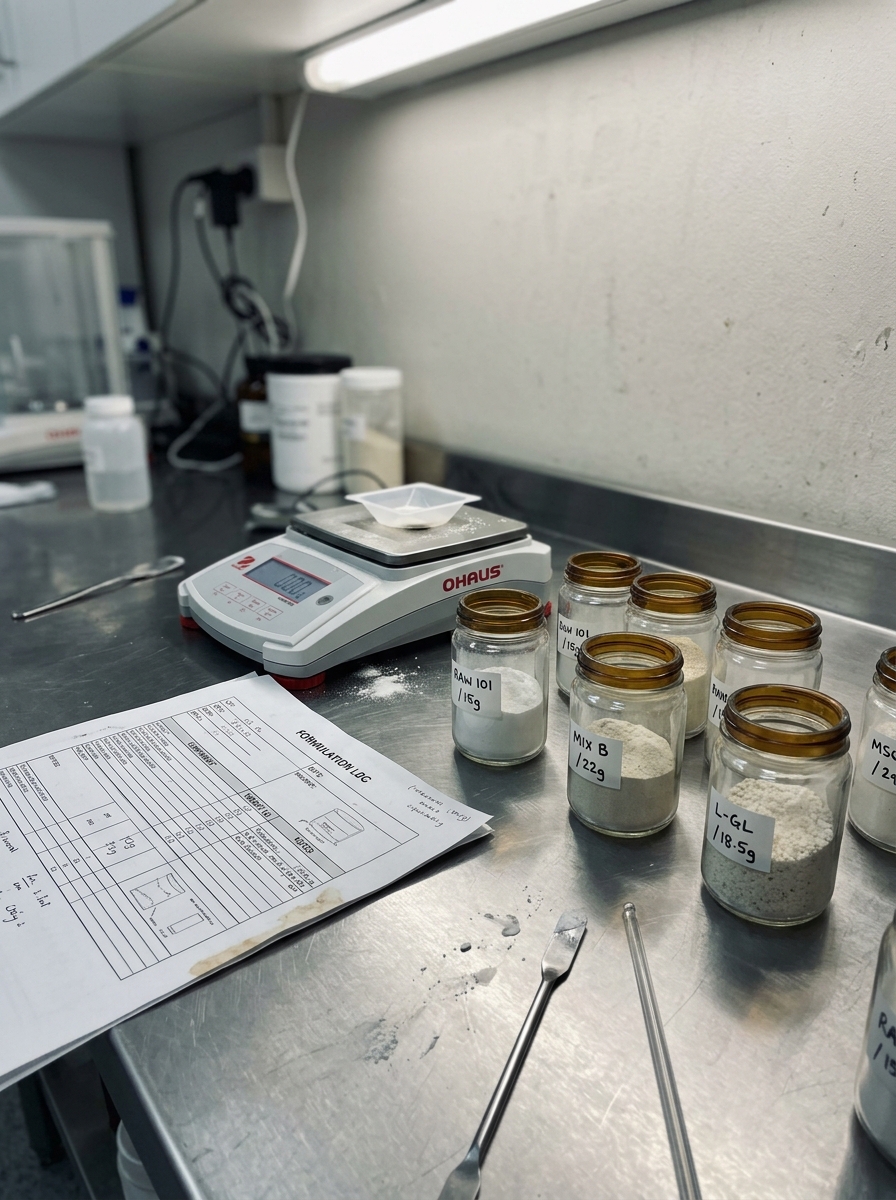
From the inside, what went into the bottles. And what did not.
What the data showed from inside
The nerve-support category has a specific pattern in its customer service data. A buyer orders once, says it helped. Orders again. Still helped. By the third or fourth reorder, the reviews get quieter. By the sixth, she stops. The company reads this as churn. I read it as a problem not getting solved.
One brand I worked with tracked repurchase behavior across their nerve and sleep lines. Sixty-eight percent of nerve-comfort buyers reordered at least once. But seventy-one percent of those reorders eventually stopped. The company’s response was to redesign the label and reformulate the flavor.
The reason for the churn wasn’t the flavor.
I received, through the customer feedback system of a different brand, a note from a woman who said the product helped her burning feet in summer but that winter always came back. She wanted to know what to do. I was asked to draft the response.
What I wrote was: individual results vary with seasonal physiological fluctuations; she might consider moving to the higher dose as directed on the label.
What I knew, writing that sentence, was that the dose was never the problem. The mechanism was. That was not something the company’s customer correspondence was intended to reflect.
I sent the email.

He had seen the pattern in the data long before he said anything.
The meeting I keep returning to
The nerve-support category has been built on a small set of ingredients for twenty years. Each has some clinical rationale. None reaches the cellular driver.
B12. Relevant to myelin sheath integrity — nerve structure. It has a role. The ceiling of that role is nerve structure. It does not address what happens when the nerve is already firing on overload.
Alpha-lipoic acid. Antioxidant. There’s reasonable diabetic neuropathy data. Works in the periphery. Does not reach the cells generating and sustaining the alarm signal. Ceiling: oxidative protection.
B12 plus ALA combined. The most common formulation I was asked to work on. Two things with partial relevance, combined on the assumption that two partial mechanisms make one complete one. They don’t.
Magnesium glycinate. Useful for many things. Muscle relaxation, mild nervous-system modulation. Not targeted at the cells driving burning nerve pain. Ceiling: relaxation.
Herbal blends. Passionflower, valerian, L-theanine. These help you sleep despite the alarm. They don’t reach the alarm. The industry does not draw that distinction in its marketing.
Menthol topicals. Gate-control pain relief, well-documented and real, and it lasts forty to ninety minutes. Then you’re back where you started.
The woman spending a hundred and ten dollars a month on three of these products is, by year three, spending thirteen hundred dollars a year on formulas whose ceiling is somewhere short of the problem. I watched this happen in customer data. I helped it happen in formulation decisions.
This is the meeting I keep returning to.
2018. A supplement brand. A marketing team that had identified burning feet at night as an under-served segment. The brief asked me to add a nighttime-specific claim. The product contained B12, magnesium glycinate, and 200 milligrams of ALA. I asked what evidence we had for nighttime burning specifically. The brand manager said the overall nerve-comfort positioning was sufficient.
I wrote: may support a calming response in the nervous system, contributing to nighttime comfort.
The brand manager approved it in four minutes. Forty thousand units shipped in the first launch window.
Thirteen hundred dollars a year per customer, for a formula that took four minutes to certify, aimed at a ceiling I already knew existed.
I drove home from that meeting without incident. That’s the part I’m not proud of.

Twenty years of formulations. Each with a ceiling nobody printed on the label.
Cleveland. February 2022. I was presenting at a supplement industry conference — a twenty-minute overview of nerve-support ingredient trends. The room was brand managers and product developers, the kind of people who translate clinical literature into SKUs.
At the end of the presentation, a woman in the back row raised her hand. She looked like she was in her early sixties. She asked: when do any of these products actually resolve the nighttime burning?
I said: they manage it. I meant it as a mechanism statement, not a confession.
She nodded and said: that’s what I thought.
I drove home three hours. By the time I got there, she was probably already in her bed, doing whatever her version of the arrangement was. Going back to what I had just confirmed was not going to get better on what she was spending her money on.
That was the last industry presentation I gave.
The file in the cabinet, second folder from the left
PEA came across my desk for the first time in 2014.
A client was evaluating it for a new formulation. I reviewed the early literature. The Hesselink mechanism work, Italian clinical data on mast-cell modulation. The science was clean. I brought it to the client meeting.
The decision not to proceed was not scientific. The brand manager said you can’t tell a story around something the body already makes. No proprietary hook. I wrote the decision note. In the margin of the printed brief I added: marketing fit, insufficient differentiation story. Filed it.
In 2019, reviewing the Hesselink and Hekker sciatica meta-analysis for a different client — 636 patients, number needed to treat of 1.5 for fifty-percent pain reduction at 600 milligrams — I recognized the compound.
My first instinct was to note it and move on. That is what you do, in this industry, when something doesn’t fit the commercial model. I pulled the 2014 file instead. Second folder, third shelf. Decision note as I’d left it. Science section underlined in green. Verified.
Over the following three months, I went back through every clinical file I’d touched since 2008. Weekends. Evenings. Roughly three hundred hours, cross-referencing mechanism literature against formulation decisions I’d signed off on.
What I found was not a mistake made once. It was a decision made repeatedly, for multiple clients, across eighteen years.
I didn’t feel vindicated. I felt like I owed someone a correction.
What the wrong floor actually means
I spent three months re-reading the PEA literature in 2019. Then I spent another three months looking at what that meant for the people who’d been buying the products I’d helped build.
What PEA does is specific.
Your body makes PEA on demand to quiet overactive nerve-alarm cells. But months of chronic irritation outpaces that supply, so the shutdown signal never arrives for sleep.
The way I’ve explained this to people who don’t speak formulation: the body has a built-in volume knob for nerve-alarm signals. Chronic irritation keeps turning it back up. When PEA supply runs behind the demand, the volume doesn’t drop. Not for sleep, not for rest.
Here is what that means for the eighteen years of products I helped build.
B12 acts on nerve-structure integrity. Alpha-lipoic acid addresses peripheral oxidative stress. Magnesium modulates muscle and nervous-system function at a general level. Every one of them acts somewhere in the pathway. None of them acts on the PPAR-alpha receptor inside the mast cells and glial cells that are maintaining the alarm signal.
The right floor is PEA. At the clinical dose — 600 milligrams — supplemental PEA gives the system the compound it has run short of making on its own.
Those are the numbers I could not explain away on behalf of a category that had chosen not to use the ingredient they supported.

The literature that was always there. The decision that was made anyway.
The formula and study references are at the link below, for anyone who wants to verify before reading further.
This is where I send people now →The published research supporting PEA as a mechanism for chronic nerve-pain signaling dates to the 1990s. The compound was in active clinical use in Italian clinical settings for decades before I entered the industry. I reviewed versions of this literature in 2014 and again in 2017 for two separate clients. Neither client proceeded.
The reason was never scientific.
PEA cannot be patented. It’s a compound the body already makes. Without patent exclusivity, there is no pharmaceutical company funding doctor education, sponsoring conferences, or building consumer awareness through the clinical-to-retail pipeline. So the compound stayed in the literature while the patentable ingredients — the ones with a brand story and a marketing narrative — continued to dominate the supplement aisle.
The label regulations don’t close this gap. A label must accurately disclose what is in the capsule. It has no obligation to disclose whether what is in the capsule reaches the cellular mechanism the product is marketed for. That distinction is maintained deliberately.
The answer was in the science the whole time. The category chose not to find it there.
Every woman who bought the wrong formula wasn’t wrong to look for help. She was given a label that was not required to tell her why its ceiling was short of her actual problem.
What happened next
After Cleveland I gave myself three months to read and three months to start recommending.
The first person was Margaret. The wife of a former client. Sixty-seven. She’d had bilateral burning feet for three years. She’d been through two of the nerve-support formulations her husband’s brand had hired me to build. She called me asking what else to try.
I told her about Youfirst PainBloc PEA 600 mg. The formulation at the clinical-trial dose, micronized for absorption. I told her to give it six weeks and not to quit at two.
She texted me. Four words: “The burning was quieter.” That was the whole message.
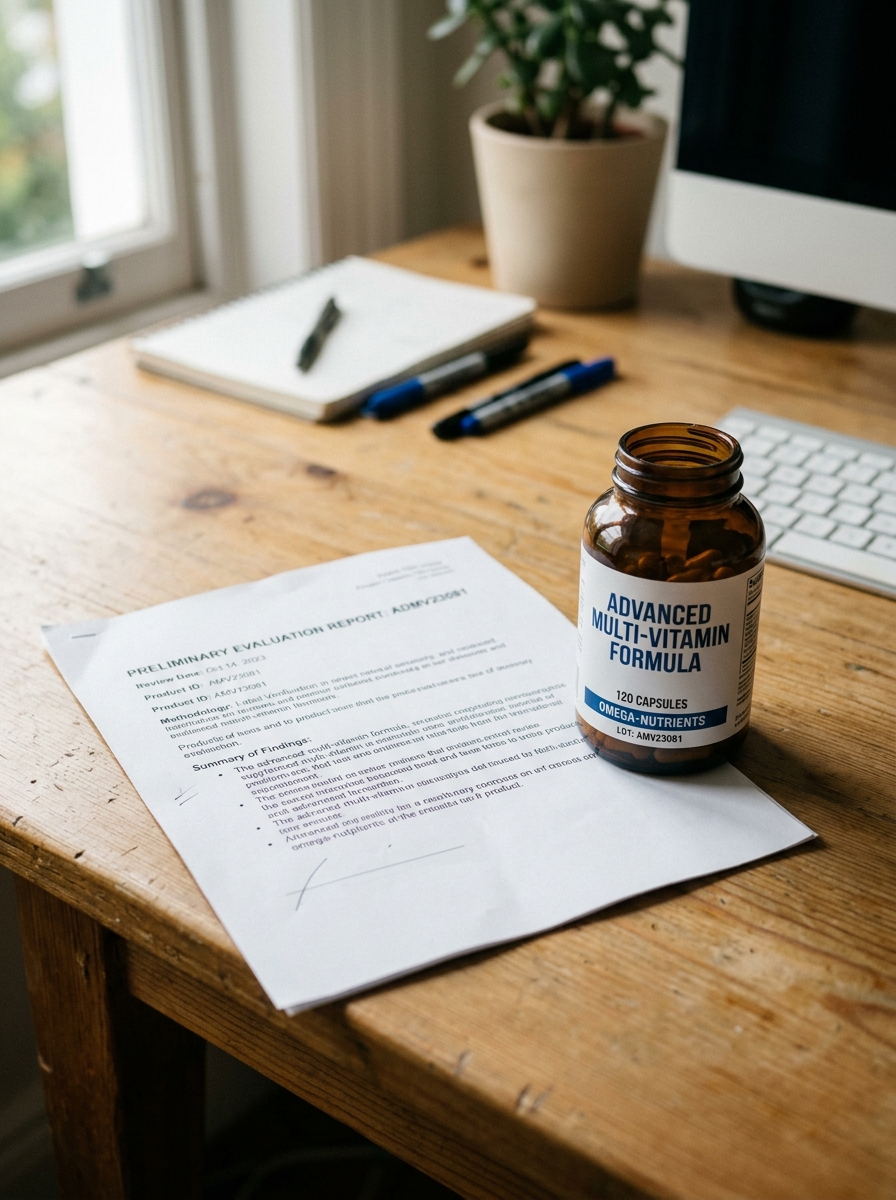
The formula at the clinical dose. The one the category chose not to use.
Margaret was sleeping through, or close enough that she stopped tracking the repositioning.
I got a second text. “Why didn’t you know about this when I was buying all that other stuff.”
I didn’t have a good answer for that. I have a filing cabinet with thirty-seven folders that does.

Week five. A text message. Four words at week three. Five at week five.
The second was a contact from a chronic-pain forum. Fifty-nine. Post-viral burning that had started eighteen months before we connected. He’d tried the standard list. Nothing had reached the mechanism.
His message at week four: “The first two weeks I didn’t notice anything. Around week three it felt like the baseline dropped. I don’t know how else to describe it.”
That phrasing matched language from the secondary endpoint data in the Hesselink and Hekker sciatica trial. Sleep quality improvement was a documented secondary endpoint. The patient-reported descriptions — the intensity dropped, it felt quieter — mapped almost directly to what both of these people described.
The pattern that convinced me was the timing. Day four or five for the first recognizable change. Not day one. Day four or five — something quieter, something the person almost explains away — and then it builds from there.
The compound doesn’t suppress the alarm. It replenishes the thing the cells use to quiet it from the inside. That’s why the response takes weeks to fully express. And that’s why it’s the only thing I’ve formulated around or recommended in eighteen years of this work that I’d feel prepared to stand behind with my name.
I cannot tell you what to take. I am not your doctor, and nothing in this piece constitutes medical advice. What I can tell you is what I spent eighteen years not saying — and what I’ve watched happen when someone uses the right formulation at the right dose for long enough.
The Formula and Study References — This Is Where I Send People NowThe company backs it with ninety days. As someone who spent a career evaluating exactly that kind of confidence in clinical data, I find it meaningful.
The correction I owe
Say plainly: the response is not universal. Some people do not feel a difference. In the clinical literature, the non-response rate is documented, and it is not zero. The product at its current pricing gives you ninety days to find out which category you’re in. I think that’s a fair test window. It’s the same window I suggested to both of the people I’ve described here.
Every month you spend on a B12 or alpha-lipoic acid blend that never reaches the cellular driver is a month the alarm keeps running. That is a mechanism statement, not a sales line. The ceiling of every product I helped build for eighteen years was somewhere short of the driver cells.
Later is not a neutral position.
Later is another month on the wrong floor.
Later is another year of spending on the surface.
Later is the compound sitting in the published literature, available to anyone willing to supply it at the clinical dose, unused by the people who needed it because the category found something more profitable to sell.
Subscription pricing starts at $29.99 a month. Three-bottle subscription: $59.99.
The Formula and Study References — This Is Where I Send People Now
—
P.S. The decision note from 2014 is still in my filing cabinet. Second folder from the left, third shelf. The science section is underlined in green. The margin note reads: marketing fit, insufficient differentiation story. I read it again last year. I don’t know if you’ll feel the difference. I know the mechanism is real. The ninety-day window is there for the rest.
P.P.S. For clinical reference: Lang-Illievich et al., Nutrients 2023. Eleven double-blind randomized controlled trials. 774 patients. p equals 0.00001. The compound the label tells you your body already makes. The one the category chose not to center.