
Clinical Evaluation
Is Youfirst PainBloc PEA Really That Good For Burning Feet at Night? We Found Out.
Five participants. Oura Ring Gen 3 sleep tracking throughout. Forty-two days of data. What follows is what the numbers showed.
The Nerve & Sleep Research Collaborative is an independent consumer-health research group. We have no financial relationship with any supplement brand. All products evaluated are purchased at retail price. These findings are published regardless of result direction.
This evaluation was designed to address a documented gap: adults reporting chronic nighttime burning sensations in their feet and lower legs have no established OTC pharmacological intervention — and no published, device-verified sleep-outcome data currently exists for any supplement commonly used for this symptom cluster.
Palmitoylethanolamide (PEA) was selected based on its meta-analytic evidence base — 11 double-blind randomized controlled trials, 774 patients, p = 0.00001 — and a mechanistic profile directly relevant to the cellular drivers of peripheral nerve-signal amplification. The product evaluated was Youfirst PainBloc PEA 600 mg (micronized formulation), purchased at retail price without brand involvement.
Five participants. Forty-two days. Oura Ring Gen 3 sleep tracking throughout. What follows is what the data showed.
What we were measuring, and why it mattered
Five adults meeting the following criteria were recruited through community health forums and sleep-tracking communities.
Selection criteria: adults aged 51–68; self-reporting chronic nighttime burning sensations in the feet or lower legs for a minimum of 14 continuous months; not currently using gabapentin, pregabalin, or any form of palmitoylethanolamide; managing symptoms exclusively with OTC methods (bedding modifications, cooling devices, topical analgesics, or OTC analgesics). All five participants reported waking at least three times per night on average due to burning sensations or positional discomfort.
Duration: 42 days. This window was selected to encompass the compound’s documented 4–8 week cumulative response window as established in the published literature.
Measurement: Oura Ring Gen 3, worn nightly throughout the evaluation period. Primary metric: sleep efficiency score. Secondary metrics: nightly waking events (via movement detection), deep-sleep duration, and morning self-reported foot sensation on a 1–10 scale (10 = worst burning).
Protocol: one capsule of Youfirst PainBloc PEA 600 mg (micronized formulation) taken once daily with an evening meal. No other supplementation changes during the evaluation period.
Pre-declared result threshold: improvement of 5 or more points in Oura sleep efficiency score, or reduction in average nightly wakings by 1.5 or more, or improvement of 2 or more points in morning sensation score — sustained across at least two consecutive weeks.
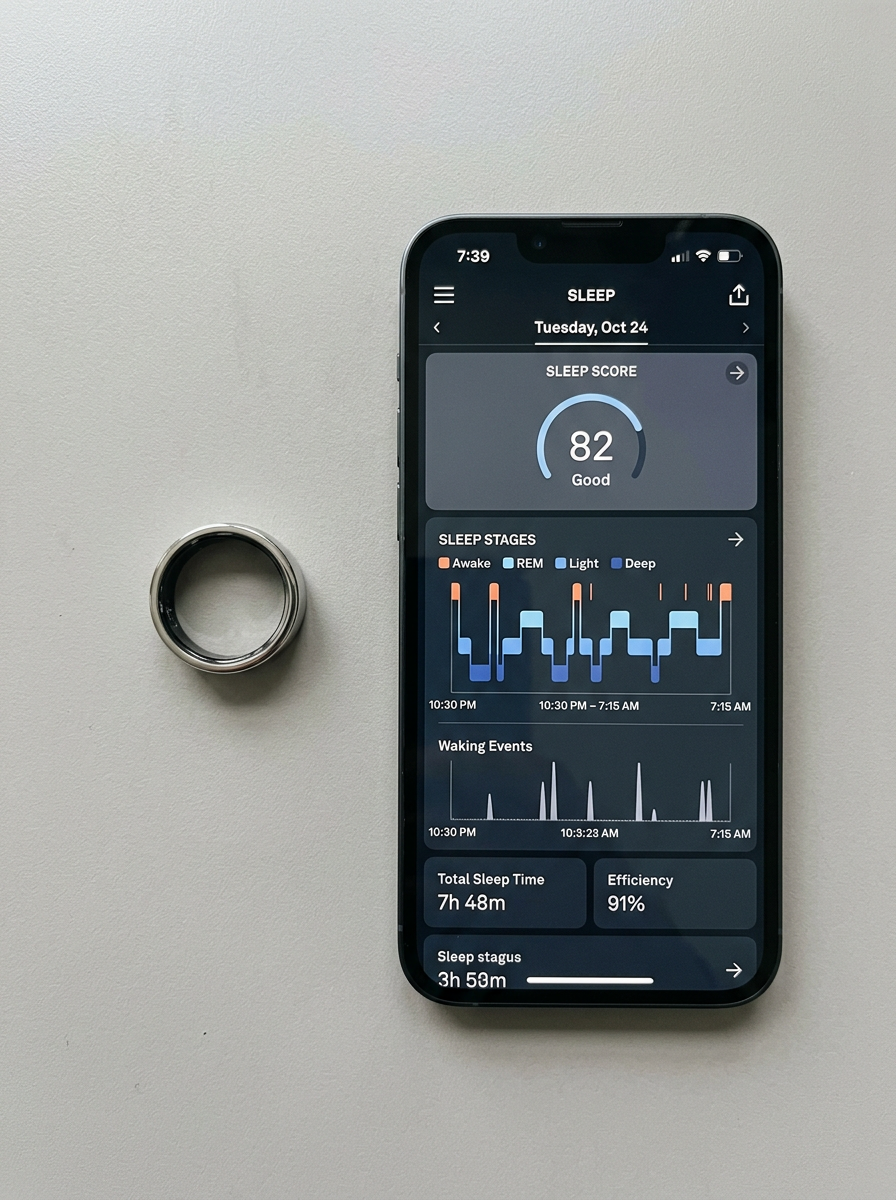
The Oura Ring Gen 3, worn nightly by each participant. Sleep efficiency tracked continuously.
Who entered the evaluation
Carol, 64. Bilateral burning in both feet, right worse than left. Duration: 22 months. Baseline Oura sleep efficiency: 67%. Average nightly wakings: 4.2. Morning sensation score: 7.8/10. Managing with cooling linen sheets and a foam elevation wedge each night.
Jim, 58. Burning and tingling in the left foot and calf. Duration: 16 months. Baseline sleep efficiency: 71%. Nightly wakings: 3.4. Morning sensation: 6.9/10. Managing with lidocaine cream applied at bedtime each night.
Susan, 62. Bilateral burning she described as “electric, worse with any contact.” Duration: 31 months — the longest baseline period in the group at intake. Sleep efficiency: 63%. Nightly wakings: 5.1. Morning sensation: 8.4/10. Managing with a nightly feet-out-of-duvet arrangement and a cooling fan aimed at the foot of the bed.
Robert, 55. Right foot burning, self-described as “hot coals from the heel up.” Duration: 14 months. Sleep efficiency: 74%. Nightly wakings: 2.9. Morning sensation: 6.2/10. Managing with a standard OTC analgesic taken at bedtime.
Patricia, 67. Bilateral burning and calf burning, worst at night. Duration: 39 months — the group’s longest-duration participant. Sleep efficiency: 61%. Nightly wakings: 5.8. Morning sensation: 8.9/10. Managing with a combination of the feet-out-of-duvet method, a ceiling fan, and a cooling compress. At intake: “I haven’t slept through the night in three years.”

Five participants. Each in their own home. Each tracking the same thing.
Where the numbers moved first
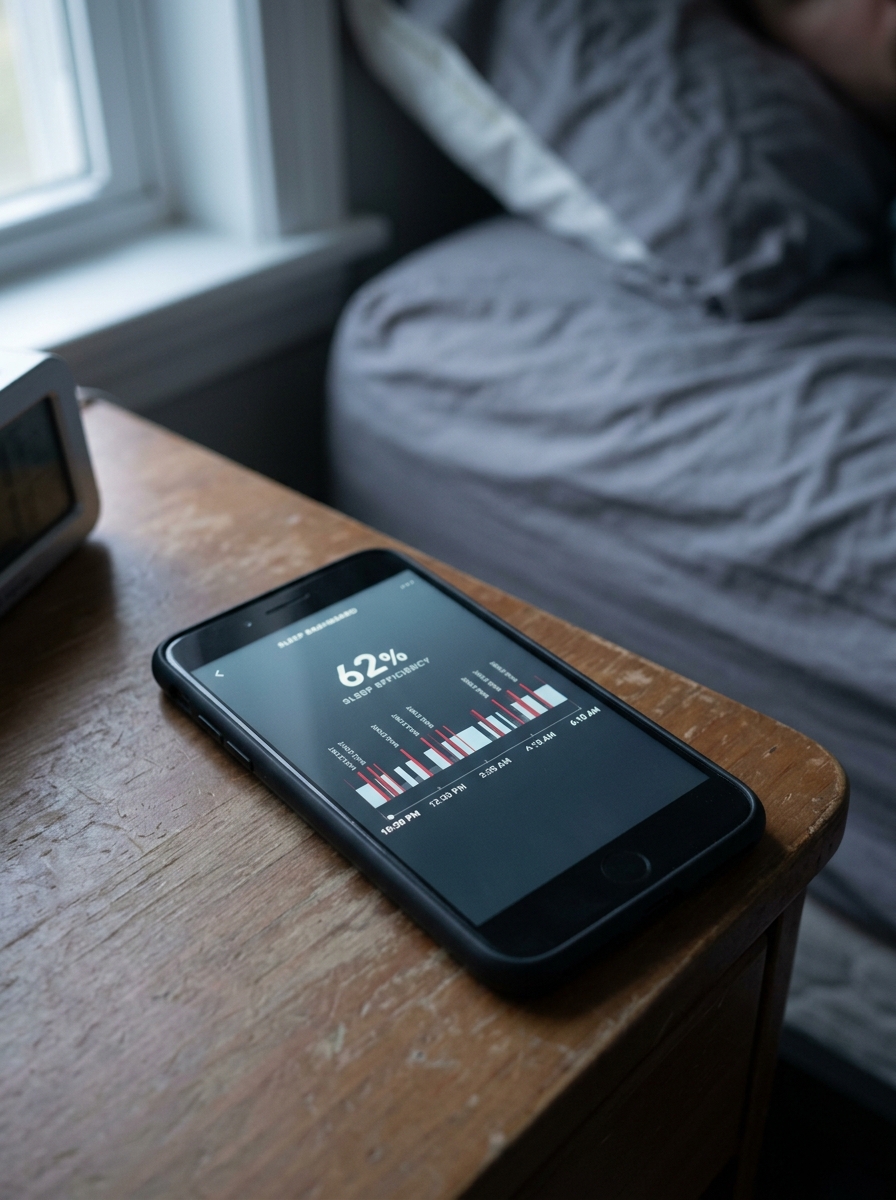
Baseline: low efficiency, multiple waking events marked. This is where the evaluation began.
Sleep efficiency: 67% → 78% (weeks 5–6, sustained). Nightly wakings: 4.2 → 2.1. Morning sensation: 7.8 → 4.4.
“I realized around day five that I’d put my feet back under the covers at some point and hadn’t kicked them off. I didn’t even do it consciously.”
Sleep efficiency: 71% → 80% (weeks 5–6, sustained). Nightly wakings: 3.4 → 1.6. Morning sensation: 6.9 → 3.7.
“By week two I stopped reaching for the cream before bed. The burning was still there some nights, but it wasn’t running things the way it had been.”
Sleep efficiency: 63% → 73% (weeks 5–6, sustained). Nightly wakings: 5.1 → 2.8. Morning sensation: 8.4 → 5.6.
Note: No measurable change in Oura sleep efficiency during weeks 1 or 2. This is noted explicitly and is consistent with the compound’s documented 3–8 week cumulative build. Susan’s profile is the most clinically instructive in the group: absence of early response was not predictive of absence of eventual response.
“I almost stopped at two weeks. Nothing had changed and I thought it wasn’t going to. Week three was completely different.”
Protocol note: Weeks 1 and 2 produced no device-measurable change in two of the five participants (Susan and Patricia). This is consistent with the compound’s documented cumulative response window of 4–8 weeks.
Readers who begin this protocol and see no change during the first two weeks should not interpret that as non-response. All five participants in this evaluation met at least one pre-declared outcome threshold by week 4. Discontinuation before day 28 is inconsistent with the compound’s mechanism timeline and with the trial evidence base.
Sleep efficiency: 74% → 82% (the fastest sustained improvement in the group). Nightly wakings: 2.9 → 1.2. Morning sensation: 6.2 → 3.1.
“Around day ten I realized I hadn’t taken the analgesic before bed for four nights. I checked how I felt. I was fine.”
Sleep efficiency: 61% → 75% (the largest absolute gain in the group). Nightly wakings: 5.8 → 2.6. Morning sensation: 8.9 → 4.9. Longest-duration participant (39 months), slowest to respond, largest absolute improvement (+14 points sleep efficiency).
“I slept five and a half hours without waking on day 41. I don’t think I’ve done that in three years.”
The participant who changed everything about how we read the data
All five participants wore the Oura Ring Gen 3 continuously throughout the 42-day evaluation. Sleep efficiency is the primary device metric.
Susan’s weeks 1–2 flat data are retained in the aggregate and stated explicitly. Her delayed profile is consistent with the compound’s documented cumulative mechanism. Absence of early device response was not predictive of absence of eventual response within this group.
Baseline (Days 1–7 avg.)
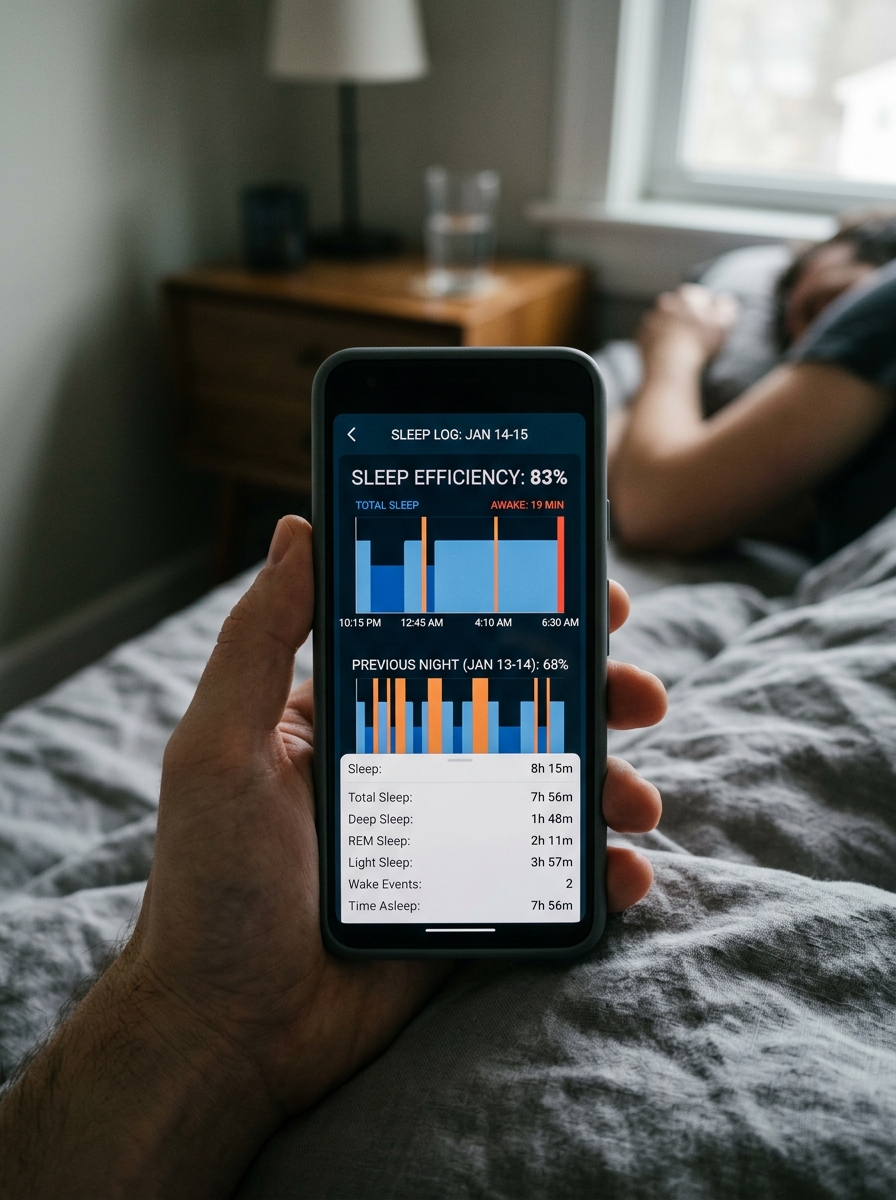
Weeks 5–6 (Sustained)
Across all five participants, mean sleep efficiency improved from a group baseline of 67.2% to 77.6% by weeks 5–6 — a mean gain of 10.4 percentage points.
Nightly waking events declined from a group mean of 4.28 to 2.04, representing a 52% reduction.
Morning sensation scores improved from a group mean of 7.64 to 4.54.
Zero participants met the pre-declared non-response threshold across the full 42-day window. These aggregate findings are consistent with a compound whose mechanism involves restoration of cellular signaling capacity rather than signal suppression: the response builds across weeks rather than peaking early, which is characteristic of PPAR-alpha pathway modulation, distinct from the fast-onset/tolerance pattern of signal-attenuating pharmacological agents.
The sample size (n=5) is insufficient for statistically definitive conclusions. These findings are directional and consistent with the published meta-analytic literature; they are not a substitute for a large-scale clinical trial.
What the mechanism actually explains
The product evaluated was Youfirst PainBloc PEA 600 mg (micronized formulation), purchased at retail pricing without brand involvement.
Palmitoylethanolamide (PEA) is an endogenous N-acylethanolamine produced by cells under conditions of injury, inflammation, and tissue stress.
The body produces PEA on demand to quiet overactive nerve-alarm cells. Under chronic load, that production falls behind demand, and the shutdown signal fails to arrive for sleep.
This mechanism — on-demand insufficiency under chronic inflammatory load — distinguishes PEA from signal-suppressing interventions such as gabapentin, which attenuate output without addressing the cellular drivers.
PEA acts on the PPAR-alpha receptor, a nuclear receptor governing mast-cell stabilization and glial and microglial down-modulation. These are the cell types responsible for amplifying and sustaining peripheral nerve signaling under chronic inflammatory conditions. The compound does not suppress the pain signal. It replenishes the compound the cells use to regulate it at the source.
The micronized formulation improves bioavailability compared to standard crystalline PEA. The 600 mg/day dose matches the primary dose from the pivotal nerve-compression trial (Hesselink and Hekker, J Pain Res 2015; 636 patients; NNT 1.5 for 50% pain reduction). This is the dose with the strongest published outcome data in the literature.
One factual distinction from the standard nerve-support category: PEA addresses the PPAR-alpha receptor directly. The B12, alpha-lipoic acid, and magnesium formulations that constitute the majority of the category do not operate at this cellular level.
Readers who wish to access the formulation evaluated here can find full product details, dosing protocol, and trial terms below.
Full Product Details and Dosing Protocol →
One capsule. One evening meal. For 42 consecutive days.
Access information for readers who wish to test the same formulation
Readers seeking to access the formulation evaluated here can find complete product details, pricing, and trial terms at the link below.
Youfirst PainBloc PEA 600 mg is available with a 90-day satisfaction guarantee — consistent with the compound’s documented 4–8 week cumulative response timeline.
Subscription: $29.99 (one bottle) • $59.99 (three bottles, B2G1). One-time: $39.99 / $79.99.
Full Product Details, Dosing Protocol, and Trial TermsReaders who wish to verify the clinical citations referenced in this evaluation may do so through PubMed using the author names and publication years cited throughout this report.
Patricia, 67. Day 41. The data point that matters most to her.