

Personal Testimony
They Knew What Was Missing From Your Nerve-Pain Supplements. They Never Told You.
By someone who spent fourteen years making the shelf decisions — and can tell you exactly why the right compound never made it there.
Your doctor said “nothing for this” and I knew there was something — and I said nothing because no one was paying me to say it.
For fourteen years I worked on the supply side of the pain supplement industry. My job was deciding what went on the shelf. I sat in product team meetings where we assessed which clinical compounds had a commercial path and which stayed in the research files. The compound that could have helped your burning feet was in those files. Repeatedly. I filed it under “no commercial path” and moved on.
Which means: if you have been lying awake with feet that burn and haven’t found anything that works, part of that outcome runs through decisions I was paid to make.
But I need to warn you: what you’re about to read will make you angry. Not at me specifically. At a logic that is very simple, and very visible once you see it — and that kept the right answer off the shelf for the entirety of the time I was there.
I left the industry four years ago. I’ve been doing this since.
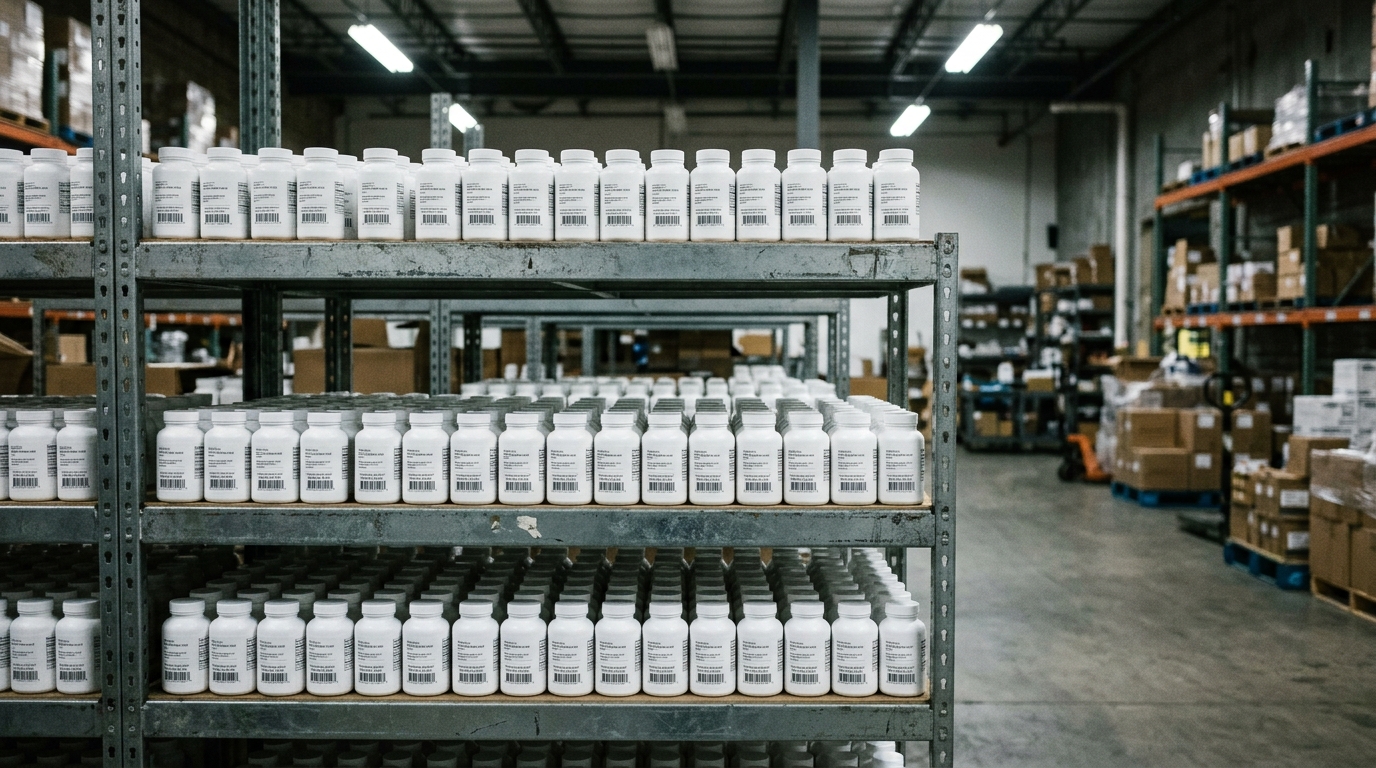
Fourteen years of shelf decisions. None of them asked whether what was on the shelf was aimed at the right thing.
What I was paid to decide
Deborah Hale. Fourteen years as a product development consultant and category buyer for specialty pain supplement distributors. Both sides of the business: the raw-material sourcing decisions that happen before a product exists, and the shelf decisions that happen when it needs to compete. I know what it takes for a compound to travel from a clinical study to a product you can actually buy.
I am not going to name the companies I worked with. Not because I signed anything that prevents it. Because the logic I’m describing was not specific to one company. Every distributor in this space operated the same way. Naming one would let the rest walk out of the room clean.
What I haven’t said yet: I was part of that logic. I made those decisions. For fourteen years. Without once asking the question I am about to answer for you.
What the complaint data showed
I did not have the problem I’m writing about. I need to be clear about that first.
What I had was fourteen years of access to customer complaint data. Every major specialty pain distributor tracks returns and complaints by product category. The burning-feet and nerve-pain category produced a pattern that appeared in every quarterly review, consistent across brands, consistent across retailers.
Two complaint types repeated so often I could write them now from memory.
The first: the burning was worst at night. The feet could not tolerate any covering. She slept with them outside the blanket, off the edge of the mattress, sometimes resting on a cold pack, because the weight of the sheet on her skin was enough to disrupt sleep. That complaint came in through every brand I worked with. Worded differently. The same problem.
The second: whatever she bought worked for a window of hours. By the next night, the same pattern. The relief reset. Nothing addressed it past the window.
I processed those complaints at nine in the morning. I read the message, entered the return code, flagged high-frequency keywords for the quarterly review, and moved to the next file.
One morning in 2019 I read a return request from a woman who had been managing burning feet for eleven months with the magnesium cream we distributed. Eleven months. The message was polite. She said it hadn’t done enough and she’d hoped for more.
I processed the return. I moved to the next file.
I should have asked what eleven months of that looked like for someone trying to sleep. I didn’t.

The complaint data described the same scene, every quarter, across every brand. She was managing it. Not fixing it.
Why nothing on that shelf reached the root
Here is what the specialty pain supplement market offered women with burning nerve pain during the fourteen years I worked in it.
Cooling sprays. Retail price: $18 to $22. Average relief window, based on the complaint data I reviewed quarterly: forty-five minutes to two hours. Mechanism: topical vasoconstriction. What it does not reach: the cellular activity keeping the nerve alarm on.
Lidocaine patches. $28 to $45. Relief window for the strongest performers: six to eight hours. Mechanism: local signal block. What it does not address: the reason the signal restarts every morning.
Magnesium glycinate. $24 to $35. Legitimate contribution to sleep quality in some populations. No documented mechanism for nerve-specific burning or contact sensitivity.
B12, benfotiamine, and alpha-lipoic acid blends. $35 to $65, depending on brand positioning. Reasonable science for populations with confirmed metabolic deficiency. For the broader burning-feet population: not the driver.
CBD topicals. $55 to $80. Growing consumer adoption. Mixed clinical picture.
“Not our problem to explain.”
The category manager I worked with longest was a man I’ll call R. He had been in specialty supplement distribution for twenty-two years. He was not careless. He applied exactly the commercial logic the business required.
The format was standard: a sourcing summary goes on the table. We review the ingredient against our category requirements. Margin. Retail velocity. Consumer education cost. A compound with a genuine mechanism but no patent protection, no existing US market awareness, and no sales infrastructure behind it required significant consumer education before it could compete on a shelf. That cost had to be justified. It rarely was.
R. slid the sourcing summary back across the table. He said: “Not our problem to explain.”
I wrote that phrase on the intake form. I scheduled the next meeting.
My physical response to that exchange: nothing. I had heard the phrase dozens of times in fourteen years. I had used it myself. It was an accurate summary of the commercial decision. The math on a non-patentable ingredient is thin. The consumer education investment is real.
The math also worked for the woman who spent eleven months on magnesium cream and sent back the empty bottle. Nobody in that meeting was doing that math.
I should have said something. I didn’t.
The margins were correct. The target was wrong. Nobody in the room was asked to reconcile that.
The question I couldn’t answer
My first advising client after leaving the industry was a functional medicine practitioner in Portland. She ran a specialty nerve and pain protocol for patients who hadn’t responded to standard interventions.
In our second session she asked me directly about PEA. She had encountered it in a European clinical context and wanted my sourcing perspective. She assumed, reasonably, that someone with fourteen years in specialty pain supplement distribution would know the compound’s US commercial history.
I knew the name. I had seen it in ingredient databases. I had seen it in sourcing emails. I had classified it as a compound without a commercial path, at least three separate times, and moved on.
In that session, for the first time, someone asked me to account for that decision.
I had no answer. Not because the answer was complicated. Because the answer was: no one was paying me to ask the question. And I had never asked it anyway.
That was the moment I went back to the research.
What the research finally showed
After that session I went back to the compound I should have investigated years earlier.
I pulled the Lang-Illievich 2023 meta-analysis first. Eleven randomized controlled trials. 774 patients. An effect size of 1.68 standard deviations with a p-value of 0.00001. I read the full paper, not the abstract. I read the methodology section. I checked the inclusion criteria to see whether the population was narrow enough to explain the number away. It was not.
I spent six weeks after that in the formulation literature. Bioavailability differences between standard crystalline PEA and micronized form. Dose-response data. The 600 mg figure that appears consistently across the trials with the strongest outcomes. I spent approximately four hundred dollars on journal access and database subscriptions I don’t normally carry.
What I found — sitting in my home office at eleven at night with a Nutrients meta-analysis on the screen — made me want to call every product team meeting I had ever sat in.
We had this. The research was there. The compound was real. And nobody was bringing it to the table because nobody was getting paid to bring it to the table.
I almost closed the file. I had found things like this before. I had closed those files too.
Why the brake ran thin
This time I didn’t close the file.
The mechanism PEA works through is documented and specific. I am going to explain it the way I would explain it to a practitioner who needed to understand it in one sitting. Your body produces PEA on demand to quiet overactive nerve and immune cells. But under chronic irritation, demand eventually outstrips supply. The pain signal runs without a brake.
What that means for everything on the shelf where you’ve been looking: cooling sprays quieting the skin for two hours, lidocaine blocking the signal locally, B-vitamin blends supporting metabolic nerve function — none of them reach the cellular system keeping the alarm on. Not because they are fraudulent. Because they were aimed at the output of a system that was already misfiring.
The practitioner in Portland had asked me why PEA wasn’t available as a standard recommendation in the US nerve-pain market. I had just read why. The body’s own calming compound cannot be patented. The clinical data had been accumulating in European journals for thirty years. Nobody was bringing it to the meeting because nobody was getting paid to bring it to the meeting.
The category was organized around that constraint. Not your pain. The margin.

The calming system. Running below the level it needs to keep up.
What the label was built to hide
What I’m describing is not an accident of the market. It is the market.
A compound can be listed as “nerve support” if it supports any aspect of nerve metabolism — regardless of whether that aspect is the one keeping your pain on.
R.’s phrase — not our problem to explain — was not a policy failure. It was the correct commercial application of a system that has never required explanation. The label says the ingredient is there. The label does not say whether the ingredient is aimed at anything that will help you.
That is not negligence. That is design.
The women who spent hundreds of dollars on nerve-support blends and cooling creams were not misreading. They were reading the label correctly. They followed the recommendation. They did what the category was built to make them do. And the category was built that way because a label that said “this product addresses the surface of your pain, not the cause of it” would not sell.
What the practitioner data found
The formulation that meets the clinical standard is Youfirst PainBloc PEA 600MG (Micronized).
I am recommending it because it meets three criteria I checked before I would put it in front of any practitioner: 600 mg per capsule, matching the dose used in the meta-analyses I reviewed. Micronized particle size, which the product name confirms, addressing the bioavailability issue that makes standard crystalline PEA largely ineffective. A 90-day money-back guarantee — which I consider the minimum window to make a fair assessment of a compounding mechanism.
If you’re already certain: youfirstlab.com/products/pea600 →
The practitioners in my advising network who have introduced this protocol to patients have shared their observations with me. I am going to give you what they gave me.
A partner noticed his wife hadn’t reached for the corner of the sheet at midnight to kick it off her feet. He didn’t mention it. She didn’t mention it. She had been disappointed too many times to name a tentative sign.
She slept until 3:47am without waking to move her feet. She woke. Looked at the time. Fell back asleep. The first thought on waking was not her feet.
She put on a pair of socks. Not her management-socks, the specific thin ones she reserved for the warmest months. The first pair from the drawer. The tolerance calculation didn’t run: which fabric, how long, what the night would cost. The socks were already on before the thought arrived.
She was standing at the kitchen sink washing the breakfast dishes. She had been standing for six or seven minutes when she noticed she hadn’t shifted her weight once. Hadn’t calculated how long she could stand. She just washed the dishes.
The functional medicine practitioner I work with most closely has had eleven of fourteen nerve-pain protocol patients report measurable sleep improvement within the first three weeks of the 600 mg dose. Two patients reported no meaningful change in the first twelve weeks. She reports both because that is what the data shows. The two non-responders are why the eleven matter.
One of the practitioners shared a specific note from a patient in week five. She had been washing the breakfast dishes — standing at the sink for six minutes — when she realized she hadn’t managed her weight around her feet once.
The practitioner wrote: “She said she stood there after and couldn’t remember the last time she’d stood somewhere without managing it. She said it quietly, like she didn’t want to give it too much weight.”

She stood at the sink for six minutes without managing it. She just washed the dishes.
After fourteen years
I am going to tell you what I tell practitioners.
PEA needs time. The mechanism is not a signal block — it does not produce an immediate effect the way gabapentin does. It rebuilds a system. That takes weeks. Six to eight weeks before you have real data on whether the mechanism is working. Twelve to sixteen weeks for a fair assessment. Expecting a clear result in two weeks is setting the evaluation up to fail — not because the compound doesn’t work, but because the system it’s rebuilding doesn’t rebuild in two weeks.
Youfirst PainBloc PEA 600MG offers a 90-day money-back guarantee. No conversation required, per their stated terms. If you haven’t noticed meaningful change in your sleep or in the burning within 90 days, the full purchase price is refunded.
Two of the fourteen patients I referenced did not respond in the first twelve weeks. I am telling you this because the other twelve mean more when I do. PEA is not universally effective. The guarantee exists for a reason.
If you want to try the compound at the dose I’d recommend, here is where to find it.
Find It at the Clinical Dose 90-day money-back guarantee — full refund, no questions, per stated terms — if meaningful change is not observed within 90 days.Subscription pricing: $29.99 for one bottle. $59.99 for two bottles with a third included. One-time pricing: $39.99 for one bottle. $79.99 for two bottles with a third included.
Given that the mechanism requires consistency across weeks, I’d recommend the three-bottle configuration. The most common reason a compounding compound appears not to work is stopping at week four before it has had the weeks it needs.
Later is another midnight reset. Later is the same two-hour window from the cooling spray. Later is another quarterly complaint category that says the same thing it said last quarter. The category was built on later. The compound that could have addressed this was in the research files. It was not our problem to explain.
The alternative to trying this is the same management options that have been managing this for years.
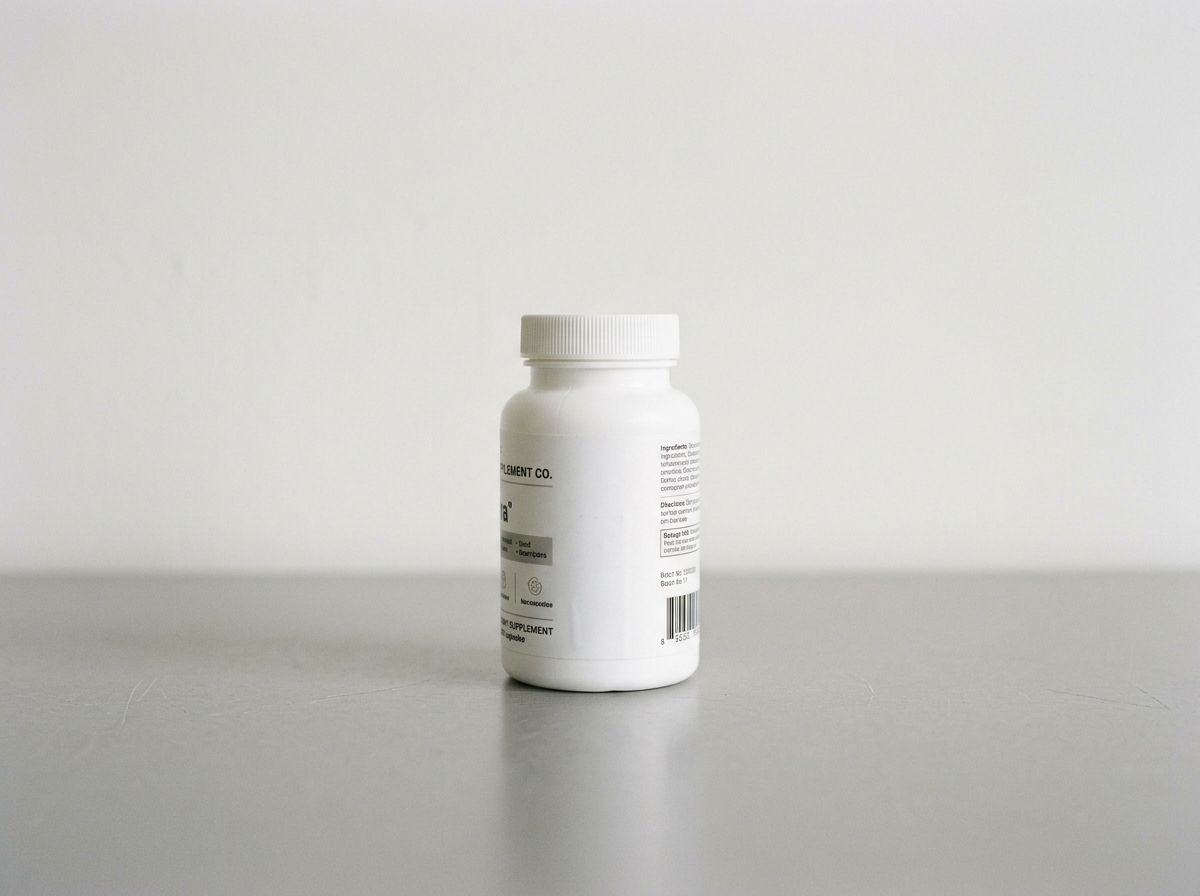
90 days. The clinical dose. The guarantee proportionate to the mechanism.
P.S. — The woman who submitted the return request in 2019 was eleven months into burning feet when she wrote that message. She’d been using what we distributed. If she’d been taking a 600 mg micronized PEA product at that point, she’d have six years of different nights by now.
I processed her return. I moved to the next file.
I still think about that sometimes.